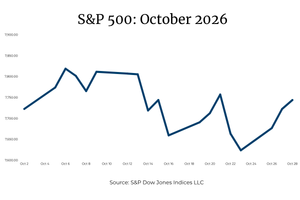
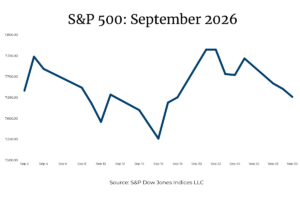
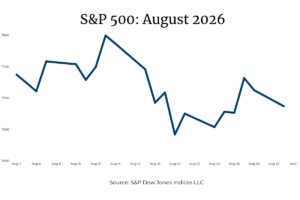
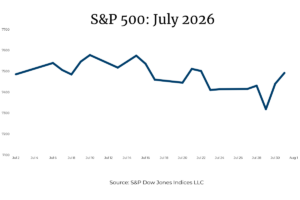
While U.S. midterm elections take place every two years, the “midterm cycle” only truly takes place in the years between presidential elections. This interim election year provides a unique story, and historical pattern, for investors.
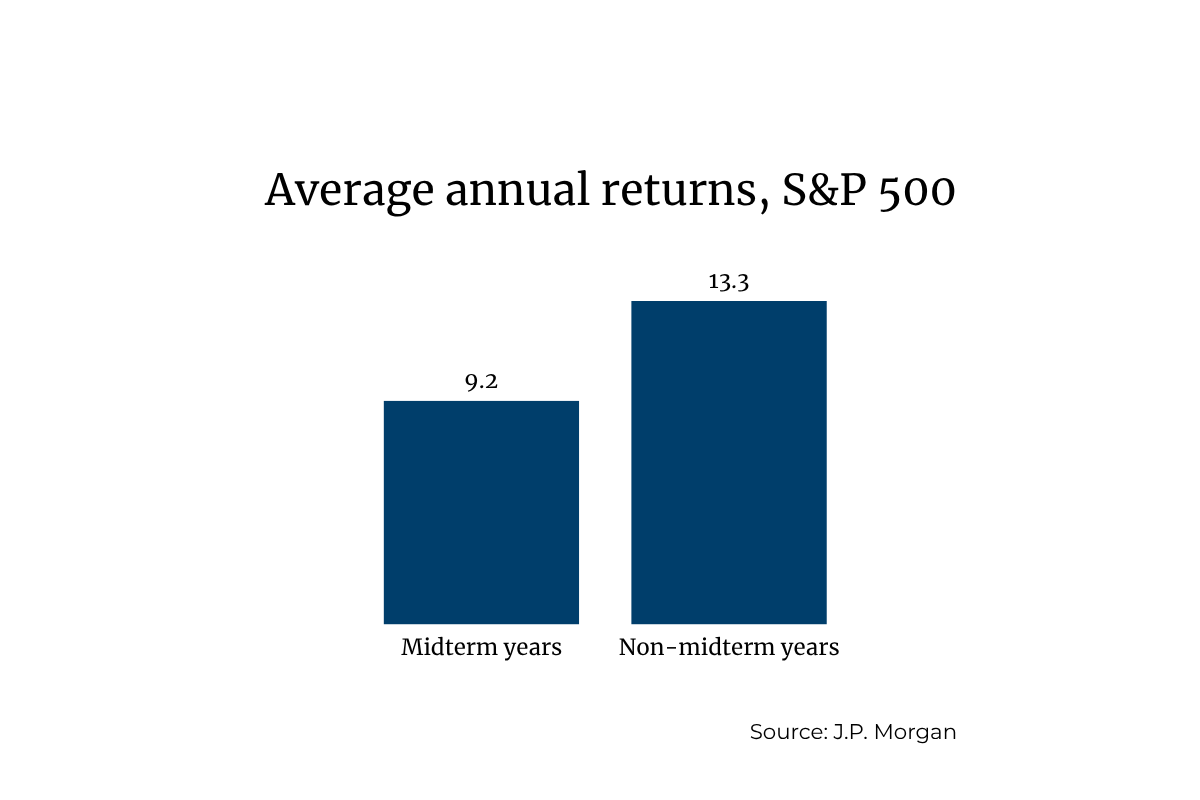
Historically, the S&P 500 has gained around 9% on average during midterm years versus an average of about 13% during non-midterm years. (That’s according to J.P. Morgan’s analysis of S&P 500 data from 1937 through 2025.) While past performance doesn’t predict future results, it can provide helpful context about what we’ve seen so far in 2026 and what we may want to consider in the year ahead.
What history tells us
Midterm years tend to be marked by higher volatility, which may contribute to the lower-than-average returns. This is expected: Uncertainty generates volatility in the market, and elections create uncertainty. Once votes are cast, volatility tends to ease.
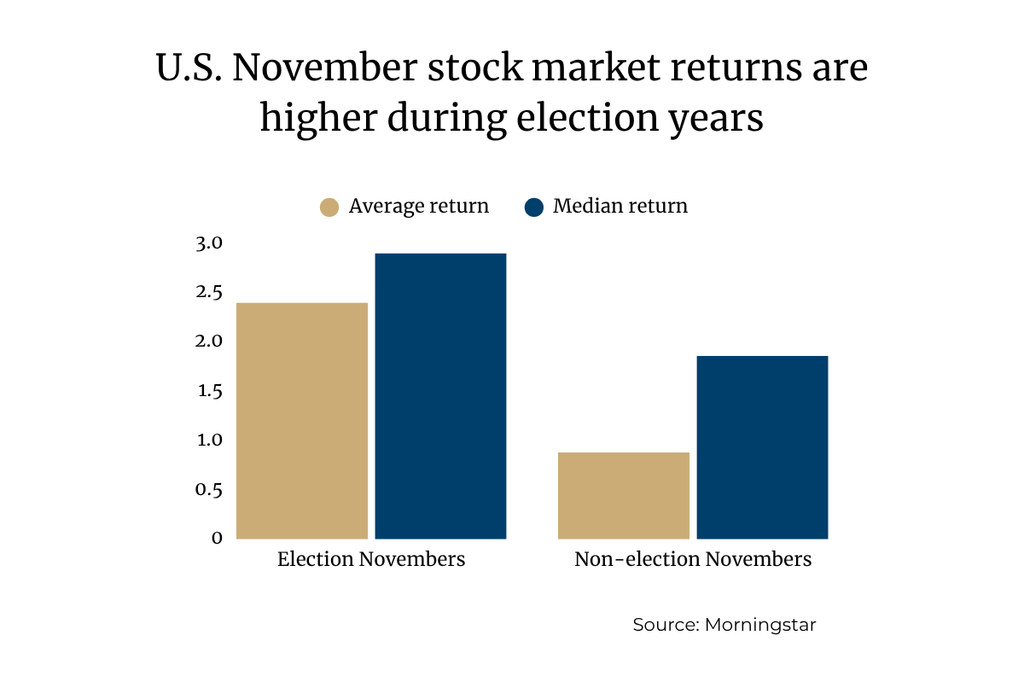
Historically, the stock market tends to rally following elections, when businesses and investors have a better handle on what to expect from a new Congress. Morningstar data shows that U.S. stock markets tend to perform better in the November following an election than in non-election years.
It’s worth noting, many of these patterns happen irrespective of which party is in power. Still, there are a few trends to consider going into the 2026 midterms specifically. Right now, Republicans control both houses of Congress as well as the White House. Here’s what we know about that, historically:
- The president’s party tends to lose seats in the House of Representatives. This is historically true—it’s happened in 20 of the past 23 elections. Polling suggests that trend is likely to continue again in 2026.
- A divided government may not be good for investors. Conventional wisdom holds that when both parties share power, it’s harder to pass sweeping legislative reform with the potential to impact businesses. This thinking became popular during the Reagan boom years when Democrats controlled Congress. But the data may not support it.
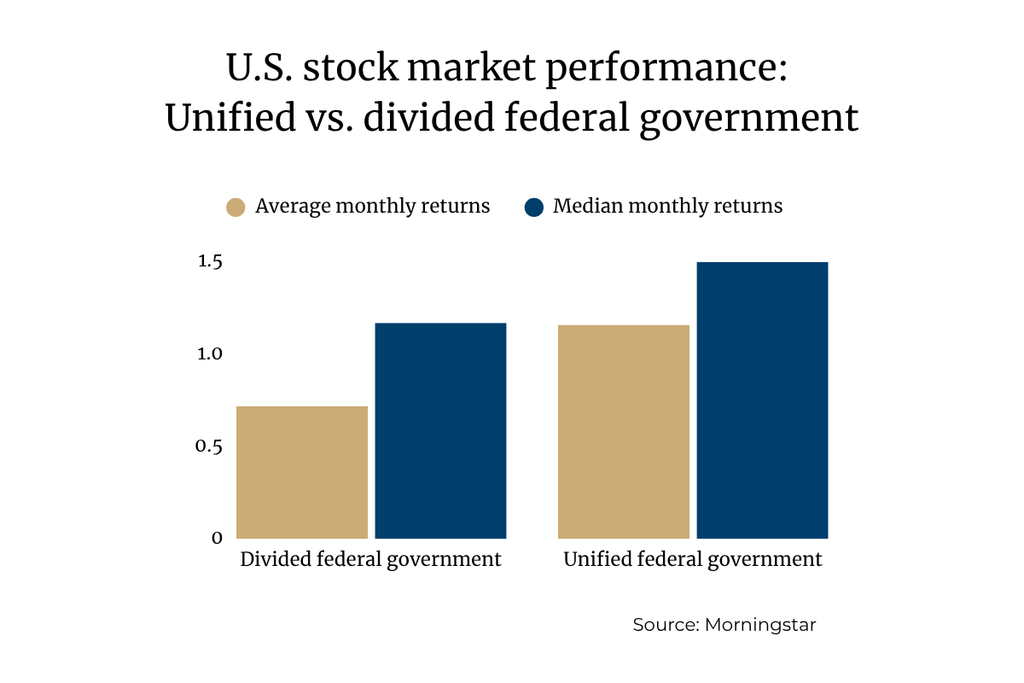
Morningstar looked at stock market performance over the past 100 years, and they found that median and average monthly returns over the past 100 years were higher in a unified government (when one party controlled both branches) than a divided government.
Why we can’t rely on historical examples
Two recent examples of a unified government corresponding with big stock market gains include the first two years under Barack Obama saw big gains, as have the past two years under President Trump’s second term.
Of course, those examples come with context. For instance, the first two years of President Obama’s first term corresponded with the rebound from the Financial Crisis. The beginning of President Trump’s second term followed a period of record-high inflation and rate hikes to combat it.
We see these extenuating circumstances play out in the midterms, too. Consider 2018 and 2022, the midterm cycles following the elections of Presidents Biden and Trump. The S&P 500 closed down in both of those years, but both years also saw the start of a Federal Reserve rate hike cycle.
Of course, 2026 has also seen a rate hike with signs of future increases to come.
What is the takeaway for 2026 and beyond?
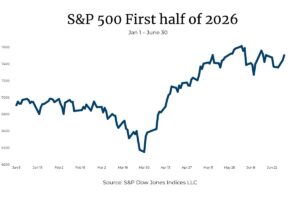
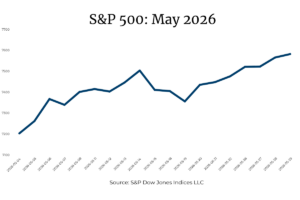
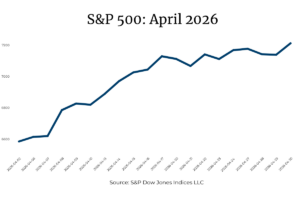
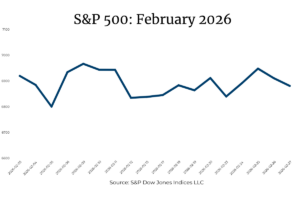
So far, returns in 2026 have outperformed the typical midterm election cycle based on historical data; the S&P 500 is up nearly 12% going into the November election.
We could see more reaction in specific sectors where a new Congressional balance could impact policy, such as artificial intelligence (AI) stocks or defense contractors. Still, these are specific sectors that may not be indicative of the overall market.
In general, we discourage clients from making investment decisions based solely on political speculation. While it may make sense to adjust positions based on potential new legislation or concrete policy initiatives, speculation about who will win the election is just that: speculation.
We’ll continue to actively monitor news out of Washington following the election for any potential policy changes that could have a more concrete impact on your investments and goals.
If you have any questions in the meantime, feel free to reach out.